- DoctorBoss
- Posts
- Why Your AI Content Sounds Robotic
Why Your AI Content Sounds Robotic
Learn the prompting framework that makes AI sound more human.

Dr. Anne Truong
May 14, 2026
In partnership with


Hello there, Doctor Boss.
If your AI outputs still feel robotic, overly formal, or painfully generic… the problem usually isn’t the AI.
It’s the prompt.
This week, you’re learning how to communicate with AI like a pro—so you can save time, create better content, improve patient communication, and build systems that actually sound human.
Whether you use Claude, ChatGPT, Perplexity AI, or xAI tools, the same principle applies:
Better prompts = better outcomes.
And for physicians, that matters more than ever.
Ready to take control of your career, diversify your income, and connect with like-minded physicians? Doctors Online Success is a thriving community designed to help you turn your medical expertise into impact, growth, and financial freedom.
🔥 The Big Shift in AI Prompting 🔥
AI no longer requires complicated “prompt engineering” tricks. Modern AI tools are smarter. But vague prompts still create weak outputs.
❌ Weak Prompt:
“Write about marketing.”
✅ Strong Prompt:
“Write a 300-word LinkedIn post for physicians explaining how telemedicine improves patient access. Use a warm but professional tone, include 3 bullet points, and end with a call to action.”
Notice the difference? The second prompt tells the AI:
WHO it’s for
WHAT to write
HOW to structure it
WHAT tone to use
HOW long it should be
That specificity removes guesswork. And AI performs best when it doesn’t have to guess.
🛠 The “Perfect Prompt” Formula 🛠
One of the easiest ways to improve your AI results is using this 6-part structure:
Step | What It Means |
|---|---|
Role | Tell AI who it should act as |
Task | Explain exactly what you want |
Context | Add background details |
Constraints | Set tone, length, style, limits |
Format | Define the output structure |
Example | Show what “good” looks like |
Example Prompt:
You are an expert physician content marketer.
Write a concise LinkedIn post explaining how telemedicine improves patient access for busy professionals.
Use a warm, conversational tone.
Keep it under 250 words.
Include:
3 bullet points
1 relatable example
a short call to action
Avoid medical jargon and write at a 6th-grade reading level.
When Did Your Business Start Running You?

What started as ownership turned into obligation.
Now you’re in every meeting, decision, and channel… not because you want to be, but because things stall without you.
It’s not a capacity issue. It’s a structure issue.
The Freedom Framework shows you how to rebuild work flows, so you can step back without things breaking down.
BELAY U.S.-based Assistants help make that real by bringing ownership to execution, so your business doesn’t rely on you to function.
🤫 Secret Little AI Hacks Physicians Rarely Use 🤫
1. Ask AI to Rate Itself
After receiving an answer, ask:
“Rate this output from 1–10 and explain how you could improve it.”
This forces the AI into self-critique mode.
The revised version is often dramatically better.
2. Let AI Interview You
Instead of struggling to explain your idea, try:
“Ask me clarifying questions before writing the final answer.”
This transforms AI into a collaborative assistant instead of a guessing machine.
3. Feed It Your Existing Content
Upload:
transcripts
articles
emails
podcast scripts
notes
The more examples AI sees from you, the more it mimics your voice.
4. Simplify for Patients Instantly
A powerful physician shortcut:
“Rewrite this at a 4th-grade reading level.”
Perfect for:
patient education
social posts
landing pages
informed consent summaries
Your ads ran overnight. Nobody was watching. Except Viktor.
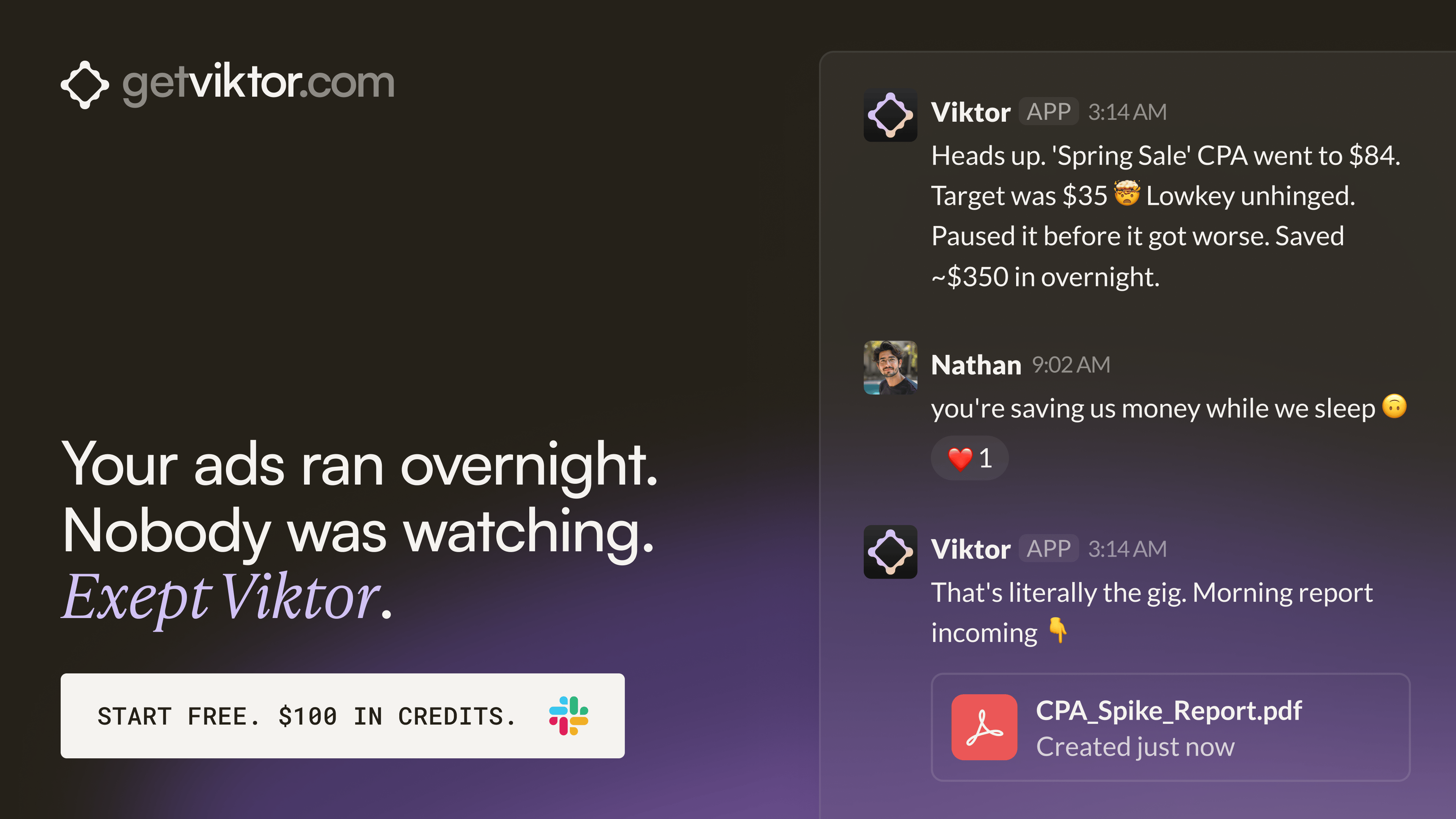
One brand built 30+ landing pages through Viktor without a single developer.
Each page mapped to a specific ad group. All deployed within hours. Viktor wrote the code and shipped every one from a Slack message.
That same team has Viktor monitoring ad accounts across the portfolio and posting performance briefs before the day starts. One colleague. Always on. Across every account.
🧩 The “Does This Sound Like Me?” Test 🧩
The best AI content shouldn’t sound like AI. It should sound like you.
One of the simplest ways to judge quality is asking:
Would you actually say this out loud?
Does this match your communication style?
Would your patients recognize your voice?
If not:
shorten it
simplify it
make it more conversational
remove fluff
The best prompts train AI to match your personality, not replace it.
📈 Why Specificity Wins Every Time 📈
Broad prompts create broad answers. Specific prompts create:
✅ sharper insights
✅ better formatting
✅ stronger persuasion
✅ less editing time
✅ more authentic communication
AI performs best when you provide a clearly defined audience, goal, tone, structure, and desired outcome. The more context you provide, the less room AI has to make bad assumptions.

Turn AI into Your Income Engine
Ready to transform artificial intelligence from a buzzword into your personal revenue generator
HubSpot’s groundbreaking guide "200+ AI-Powered Income Ideas" is your gateway to financial innovation in the digital age.
Inside you'll discover:
A curated collection of 200+ profitable opportunities spanning content creation, e-commerce, gaming, and emerging digital markets—each vetted for real-world potential
Step-by-step implementation guides designed for beginners, making AI accessible regardless of your technical background
Cutting-edge strategies aligned with current market trends, ensuring your ventures stay ahead of the curve
Download your guide today and unlock a future where artificial intelligence powers your success. Your next income stream is waiting.
🛠 Your Quick Action Plan 🛠
Try these 5 upgrades immediately:
Add a clear role to every prompt
Define audience + tone explicitly
Ask AI clarifying questions first
Request a self-rating revision
Simplify outputs to patient-friendly language
Then compare your results. You’ll notice the difference instantly.
❓ Frequently Asked Questions ❓
Q: How do I know if my AI prompt is too vague?
A: If your output feels generic, repetitive, or off-topic, your prompt likely lacks specificity. Adding context, audience, tone, and formatting instructions usually improves the response instantly.
Q: How can I make AI sound more like me?
A: Feed AI examples of your writing, podcast transcripts, emails, or social posts so it learns your communication style. Then ask it to mimic your tone and vocabulary.
Q: Should I trust AI-generated medical content without reviewing it?
A: No. You should always review AI outputs before publishing or sharing them. AI can help draft ideas quickly, but you are still responsible for accuracy and compliance.
Q: What’s the fastest way to improve my AI results today?
A: Start using structured prompts with clear roles, tasks, context, constraints, and formatting instructions. Even small prompt improvements can dramatically improve output quality.
Q: Why does AI sometimes sound overly formal or robotic?
A: AI defaults to generic professional language when it lacks examples or tone guidance. Asking it to write conversationally, concisely, or at a lower reading level usually fixes this quickly.